Our Community Blogs share stories from across our work with equity-deserving communities, highlighting AHC programs, partnerships, and community-led initiatives in action. Through reflections, updates, and success stories, we showcase how culturally responsive programming and inclusive service delivery support individuals and groups to strengthen wellbeing and build capacity.
Alongside program insights, you’ll find community success stories and testimonials that reflect the impact of collaboration, participation, and grassroots leadership. Together, these blogs offer a practical and people-first look at how communities are advancing their own wellbeing and prosperity, with AHC walking alongside them as a partner.


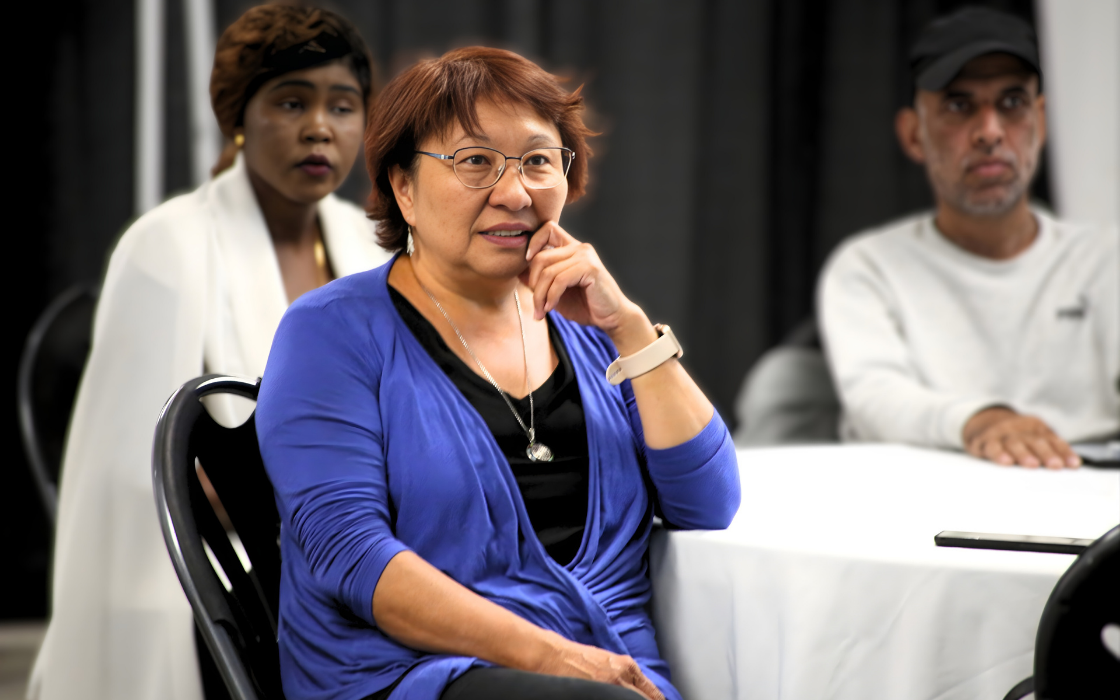
A Community of Practice (CoP) was held at the Action for Healthy Communities (AHC) Community Hall, attracting 20 community members from various Community Initiatives (CIs). The event featured introductions, group discussions, presentations on Asset-Based Community Development (ABCD), and an overview of the CI implementation process post-Seed Grant allocation.
The event had two main objectives: fostering a collaborative environment for exchanging experiences and best practices and building connections between different community groups. The ultimate goal was to cultivate a culture of mutual learning and active engagement.
The event was highly successful, demonstrated by the robust engagement during discussions, brainstorming sessions, and networking activities. Participants expressed enthusiasm for future CoP engagements and a willingness to take on leadership roles. Several groups suggested topics for the next mini CoP, indicating continued active involvement.
Additionally, CDU hosted a CoP at AHC, where various community leaders shared productive discussions, resulting in several key takeaways for future activities and initiatives:
Next Steps: CDU proposed that community leaders take the lead in creating the next CoP event, with CDU providing support and logistics. Regular check-ins and follow-up meetings are scheduled weekly to prepare community leaders for the second community-led CoP meeting in August.

Young Learns, a South Sudanese community group, led the initiative Empowering Youths by Reading Club and Aboriginal Awareness, which was awarded a Seed Grant. The community-led initiative focuses on educating and providing resources to South Sundanese youth ages 10 - 17 years on Canada's indigenous history, people, tradition, values, and culture through reading. The group provided books that inspire individuals, provide guidance, and offer insights into the lives and challenges of Canada's Indigenous community.
One of the themes of the reading session was Stories of Two Different Cultures, where participants read South Sudanese and Indigenous stories, taking the opportunity to learn about similarities between the two different cultural values and heritage. Young Learns provided children with a reading session called Giving Back to the Land, where they learn how they can protect and respect the land they live on.
The initiative started in June and will continue until September 2024. AHC is proud to have been a part of this community-driven initiative in making a positive difference.

The quarterly, community-led Community of Practice (CoP) convened on August 17, 2024, at Action for Healthy Communities (AHC) Community Hall, gathering 16 community members from various grassroots groups and organizations. This vibrant event, which was entirely planned, implemented, and facilitated by community leaders, featured four interconnected sessions aimed at fostering collaboration, learning, and strategic planning.
The event began with a warm welcome from Naz Aitkulova, a community leader from the Kyrgyz Canada Association. Naz led an engaging introduction session, setting a collaborative tone and encouraging participants to connect and share their experiences.
In the second segment, Manita from the WMEN - Nepalese Women Group presented the purpose and benefits of the Community of Practice in community development. Her interactive session sparked lively discussions, with participants actively engaging in dialogue, asking questions, and gaining a deeper understanding of how CoP can drive positive change in their communities.
The third segment, facilitated by Lal Jan from CIRCLE International, involved guiding the participants through a SWOT analysis of their community initiatives. This strategic exercise allowed the group to collectively identify strengths, weaknesses, opportunities, and threats related to their ongoing and future projects, providing valuable insights to enhance their impact.
The final segment included refreshments and networking, which allowed participants to build new connections and explore opportunities for future collaboration.
The CoP proved invaluable for community members to share knowledge, build relationships, and collaboratively explore strategies for advancing their work. The event concluded with a shared commitment to continue fostering a supportive and resourceful network that empowers grassroots initiatives.

On October 9, 2024, Action for Healthy Communities (AHC) hosted its 3rd annual Building Inclusive Communities Forum, bringing together nearly 150 attendees, including leaders from 30 grassroots organizations, community developers, and officials from across sectors. The event provided a platform for dialogue and collaboration to create a more inclusive and cohesive society.
With a strong focus on building community resilience using the Asset-Based Community Development (ABCD) approach, the forum became a vital space for networking, knowledge sharing, and capacity building. Attendees explored strategies to empower Edmonton’s most vulnerable communities, highlighting the strengths within these communities and mobilizing resources to address systemic barriers.
The day began with a land acknowledgment and an opening prayer, honoring the traditional territories of Indigenous peoples. Aftab Khan, Executive Director of AHC, delivered the opening remarks, setting the stage for a day filled with meaningful dialogue. He also acknowledged the financial support provided by the Canadian Race Relation Foundation (CRRF) for the event.
Keynote speaker Dr. Jonathan Massimi’s keynote addressed building resilience in vulnerable communities through ABCD as a major draw, offering insights into how communities can leverage their strengths to overcome challenges. His address was followed by breakout sessions that delved into topics such as systemic racism, asset mapping, resource mobilization, and sustainability. These interactive discussions empowered participants to engage deeply with the ABCD framework, fostering ideas on using existing community assets to address vulnerabilities.
A dynamic panel discussion followed, moderated by Alphonse Ahola, Executive Director of FRAP, on how current socio-cultural and economic conditions impact the determinants of well-being for residents of Edmonton. The panelists—Barhet Woldemariam (Centre for Race and Culture), Leanne Hedberg (Social Innovation Institute at MacEwan University), Vanessa Zembal (Edmonton Social Planning Council), and Joanne Currie (Edmonton Community Foundation)—provided a range of perspectives on how social, cultural, and economic factors influence well-being and community resilience in Edmonton.
One of the forum’s key moments was the plenary session, "Empowering Youth Leaders through Community Action," which celebrated the contributions of young people in Edmonton’s anti-racism efforts. The session spotlighted the power of youth leadership and the importance of investing in young changemakers.
The forum ended with Erick Estrada and Helen Rusich, members of AHC’s Community Development Advisory Committee (CDAC), reinforcing the importance of collaboration and community-driven solutions. They urged attendees to continue fostering networks and spaces where all residents can thrive, noting that building inclusive communities requires sustained effort and dedication.
The forum successfully showcased the power of community-led initiatives, reaffirming AHC’s commitment to creating inclusive spaces, empowering grassroots organizations, and promoting long-term well-being for all. It was a day marked by collaboration, action, and shared vision, reminding everyone present that, together, we can build a more inclusive and resilient Edmonton.
Click here for more information on community-capacity building.

On November 2nd, the Children and Youth program at Action for Healthy Communities hosted its third Collective Action Forum at the Mill Woods Seniors Association. The event brought together a diverse group of stakeholders, including sports and community organizations, representatives from different levels of government, scholars, researchers, and youth involved in sports. It provided a unique and valuable opportunity for stakeholders to connect, exchange ideas, and learn from one another.
Keynote speaker Shauna Booka, the CEO and President of Inclusion in Canadian Sport Network from Toronto, provided attendees with her expertise and regarding Equity, Diversity, and Inclusion (EDI) related matters within the Canadian amateur sports industry.
CAF also invited a group of panelists to share their thoughts on sports inclusion. The panelists included Free Play Founder & CEO Tim Adams, Executive Director for Alberta Snowboarding Association Mo Walker, Director of Performance Development for Edmonton Track and Field Council Robyn Webster, CEO of Sport Edmonton Reed Clarke, Community Development and Social Impact for Sport Edmonton Ashley Prasad, and Executive Director for InMotion Network Lindsay Wright.
The forum facilitated insightful discussions on fostering more inclusive sports participation and addressing the barriers for underserved communities through a panel discussion, breakout sessions, a keynote speech, and roundtable conversations. Many participants expressed, both during and after the event, a desire for more opportunities like this to connect each other.

The Edmonton Chinese Writing Club launched a Creative Writing Boot Camp titled "Sharing Wisdom Across Cultures through Stories." This four-week program took place on Mondays and wrapped on December 9, 2024. The sessions were facilitated by Kate Boorman, Write in Resident of EPL (2023) . It features a group of women who are passionate about storytelling and cultural heritage.
This exciting initiative brought together women from diverse backgrounds to share and preserve Edmonton’s rich cultural heritage through storytelling in English. The registered participants were expected to attend at least 75% of the activities under this initiative. The sessions included creative writing workshops led by award-winning author Kate Boorman, public storytelling events at the Edmonton Public Library, and an opportunity to be published for free in a collection of non-fiction stories
The Creative Writing Boot Camp is a world wisdom book project that tells stories about Edmonton’s cultural landscape, natural history, built history, objects, and language. This project will ultimately create an important collection that details and preserves the heritage of Edmonton.
ECWC is a vibrant and inclusive community group who has successfully secured AHC Seed Grant twice in 2023 and 2024 consecutively. The group is dedicated to fostering creativity and intercultural communication through writing in both Chinese and English languages.

We at Action for Healthy Communities (AHC) believe that the next generation of leaders is now.
That’s why our AHC Youth team’s Empowering Leadership in Youth Through Community (ELYCA) program helps passionate youth create youth-led projects that impact our Edmonton communities. Making a societal difference requires awareness, passion, and determination for change. Last year, we had 15 groups who will be completing their project at the end of this month. While we had numerous successful youth-led projects, The Creatives Collective from our second cohort of the ELYCA program is showing it’s stylish to be environmentally friendly.
Clothing waste is a significant contributor to environmental challenges, with millions of tons of discarded garments ending up in landfills every year.
In fact, according to a 2023 study by the University of Waterloo, Canadians alone dispose of nearly 500 million kilograms of fabric each year which includes clothing, household linens, and other fabric-based products. This waste not only consumes valuable resources but also releases harmful greenhouse gases, exacerbating climate change.
Last year the Creatives Collective was founded by a diverse team of youth who are passionate about addressing the growing global issue of clothing waste while helping people discover their personal style. For the Creatives Collective group, promoting sustainable fashion practices is a critical step toward building a more sustainable and equitable future.
Throughout 2024, The Creatives Collective made a lasting impact by hosting a series of creative, hands-on workshops. These included:
By equipping participants with practical skills and raising awareness about the environmental cost of fast fashion, the group empowered individuals and youth to make more conscious fashion choices and embrace sustainable practices. Their efforts highlight how innovative, youth-led initiatives can tackle global challenges and inspire meaningful change in local communities.
Our ELYCA program has not only created initiatives that impact the community but has helped empower youth leaders to reach their full potential. That’s not to say there haven’t been some fair share of obstacles as well. We sat and spoke with team members Raiyana and Muskaan to get their new-found perspective on leadership and the challenges they faced.
You said that you had to get out of your comfort zone for this project, what did you mean by that?
Raiyana Being a leader and managing people under you and doing it in a way that’s collaborative, decision-making, and teamwork was something that I learned which, I don’t think I was comfortable doing before this project.
You engaged a lot of participants using Instagram. How was that for you?
Muskaan: At first, we were scared to bring out ideas onto social media because not everyone understands the vision and we really tried to work hard to engage an audience that’s not open, especially in Edmonton. A lot of Edmontonians are not used to having creative outlets and are scared to come forward and engage, so we were hard-pressed in finding ideas to bring out this audience. It is really hard to attract people who are not actively engaged in creative communities.
Raiyana: To add on to that, it is our first time doing something like this and we are not established so it was hard. A lot of people do not usually care about environmental initiatives because they don’t think it impacts them directly.
Creatives Collective staying engage with their social media. Follow them at on Instagram the.creatives.collectiveeMuskaan: Many people want to keep shopping regularly because things like thrifting take time and it’s not easy. People are usually not engaged in sustainable fashion efforts and that was our hardest challenge. Also when you are starting an initiative you have to sit with that bitter feeling that you are not getting engagement , and sometimes it can be disheartening. When we started, we did not have a lot of people engaging and it took us a while to even get to about 200 followers to our account.
What is something that you are reflecting on right now as a positive outcome of your project?
Raiyana: I am proud of our initiative because what we are doing is very new to the City and after our event focused on clothing swaps, we saw many groups who we know starting to start their own swapping events which told us that they took inspiration from us!
Muskaan: Being able to put yourself forward and problem solve and put your ideas to life and put it into something physical is something that is hard to do. I am a very idealistic person and I was never, ever able to put it into action, and having these workshops and events was a representation of our ideas coming to life. The confidence that comes with putting yourself out there is a big thing especially coming out of your comfort zone, doing presentations, and putting yourself out there which we had to do a lot when promoting our project.
The Creatives Collective had 12 workshops they presented throughout the year, and because they gradually gained momentum after each activity, more participants were waiting to hear when they would host another event. At their final event on Friday, January 17th, they hosted a tote bag-making workshop focused on highlighting sustainable bloc printing South Asian practices.
The tote bag-making workshop had over 30 participants in attendance, and the group made connections with local Edmonton groups focused on sustainability, including Waste Free Edmonton. They also collaborated with other youth-led groups in the ELYCA program, like LEED (Linking Education in Edmonton).
As ELYCA is a one-time seed grant, the Creatives Collective is not able to apply for it again, but their mission is far from over. Before all groups complete their project, they attend a sustainable workshop where they are informed of other ways that they can continue sustaining their activities.
The Creatives Collective plan on continuing with their activities by partnering with other local groups and applying for funding from organizations such as Volunteer Alberta via the ASCEL grant and the Sprout Fellowship, which only accept participants who have led a Canada Service Corps-funded project in the past. You can follow the group on their Instagram account @thecreativescollective or contact them via email at thecreativescollectivee@gmail.com
For more information on the ELYCA program, please visit the ELYCA page on our website or follow us on Instagram at ahc_youth

This month, the Children and Family Empowerment Program resumed its exciting activities in Elementary and Junior High schools, including STEM Club Sessions and NYEI Sessions, after the holiday break.
“My son loves STEM Club so much. Every time after the program ends, he would teach us what he learned and recreate the experiment,” said a parent of AHC's STEM Club participant.
One of the key spotlights was the end-of-cohort celebration for the STEM Club 2024-2025’s first group of participants. The event brought students together to celebrate their hard work and learning achievements in STEM. The celebration featured a fun-filled pizza party, where students played STEM-related trivia games designed to reinforce their knowledge in an interactive and enjoyable way. These games not only tested their STEM skills but also fostered teamwork, collaboration, and boosted the students' confidence in these subjects.
The celebration served as a reminder of the students’ dedication and accomplishments, leaving them feeling motivated and excited to continue exploring STEM fields. As a token of recognition, each student received a certificate for their commitment and enthusiasm toward STEM. By making learning both educational and fun, the program aims to inspire students to keep pursuing their interests in science, technology, engineering, and math while building lasting friendships with peers who share similar passions.
"Thank you for making so much memories and letting us learn! Some of the lessons really helped with my assignments and helped me succeed,” said a student.
STEM Club continues at Thorncliff, Belmead, Alex Janvier, Brightview, St. Catherine Catholic, Inglewood, and Althone school.

Action for Healthy Communities has supported immigrants settling in rural Alberta since 2020 through our Small Centres program. We are proud to be part of a long tradition of helping immigrants come to our province and making it their home. Rural Alberta has been home to immigrants from around the world for more than 100 years. Stories of immigrants from Eastern Europe, especially Ukraine, are well-known, but the Ukrainians were not the only immigrants settling in the Prairies at the turn of the 20th century. Rural Alberta is home to a unique piece of Canada’s Black History: Amber Valley.
In 1872, much of Western Canada was very sparsely populated. Settlements were rare, small, and far away from each other. Canada’s government in Ottawa was anxious that the “wild west” of the United States—with gunslingers and cowboys, cattle theft, and limited ability to enforce the law—would come north and disrupt Canada’s growing economy and nationhood.
To solve the problem, the Government of Canada signed the Dominion Lands Act. Under the Act, families, companies, religious communities, and other organizations could claim a “homestead” in rural Western Canada. These homesteads were small parcels of land which could be used for living and farming.
The Government of Canada advertised the homestead lands far and wide: in the United Kingdom, in Europe, and in the United States. These advertisements reached a population of Black Americans living in the Southern United States, which began a movement of Black immigration to Alberta.
In the late 19th and early 20th centuries, many Black Americans were living under racist policies of segregation and the Jim Crow system. Racist violence, including targeted lynchings and riots, was common. Canada’s promise of available land, safety, and prosperity was attractive to potential immigrants.
While Canada’s homesteading policy provided opportunities for landownership unavailable to Black people in the southern United States, it was also plagued by racism. Potential Black immigrants were targeted to prove their literacy and financial stability above and beyond what was required for immigrants arriving from Europe. Relatively few Black immigrants were permitted to participate in the program.
From 1909-1911, approximately 1,000 Black Americans from Oklahoma and Texas made the trek to Alberta. Consistent with the homesteading policy, they were able to secure land parcels in rural communities.
In 1910, 300 Black Americans established Pine Creek (renamed Amber Valley in 1931). Located about 160km north of Edmonton, Amber Valley was built from land that had been abandoned by earlier European homesteaders. It required years of labour to be useful for agriculture.
From 1911 until the 1940s, Amber Valley was a significant rural community in Northern Alberta. It had a school, educating students from Kindergarten to Grade 8, a post office, and other businesses.
Image source: Western Canada BaseballCommunication between settlements was very limited, so most Albertans were unaware of the all-Black community near Edmonton. However, a few years after its founding, Amber Valley established a baseball team. The Amber Valley team had only Black players, who would compete against the White players from other rural communities. This was groundbreaking for the time—there were very few Black people in Canada west of Nova Scotia, and in the United States, baseball was legally segregated by race until 1947.
An annual Canada Day baseball tournament would be held in Lac La Biche, about 80 km away. The Amber Valley players were a staple of the event.
By the 1940s, many homesteaders throughout the Prairies had given up rural life and had chosen to move to larger towns and cities. Amber Valley was no exception. With increasing opportunities available for Black Canadians, most of Amber Valley’s residents moved elsewhere in Canada. In the 1960s, the population significantly decreased, and currently, Amber Valley is considered a ghost town.
The history of Amber Valley still has impacts in Alberta. Some former Amber Valley residents established Shiloh Baptist Church in Edmonton, which remains one of Western Canada’s largest Black churches. It is also located in Queen Mary Park, just a few minutes walk from the Action for Healthy Communities downtown office.
Amber Valley may be gone, but it is not forgotten.
To celebrate Amber Valley as part of Black History in Canada, Canada Post issued a commemorative stamp in 2021. A replica of the Amber Valley schoolhouse stands in the Canadian Museum of History in Gatineau, Quebec. One of the original cabins built by the earliest settlers is still standing in the community, and visitors can visit the site off Highway 55. While Amber Valley has vanished into history, its legacy and impact it has on Alberta can still be felt today.
Since the first European settlement in Alberta in 1788, the province has continued to be a place where newcomers come to find opportunities and a new home. Many migrant communities of all cultures and ethnicities have since settled into rural Alberta, an echo of the Amber Valley settlers who came before. For the past 5 years, our Rural Small Centres teams have continued this proud tradition, helping newcomers settle into rural Alberta. While we still have a long way to go, we are grateful for those who came before and helped settle and build Alberta to become the diverse and vibrant province that it is today.

This February, we at Action for Healthy Communities (AHC) are honoured to celebrate the Black-led communities we partnered with during this Black History Month.
It’s a wonderful opportunity to honor the amazing legacy of Black communities and empower the leaders of tomorrow. With engaging storytelling, fun educational activities, and community-led events, we’ll focus on this year’s theme: "Black Legacy and Leadership: Celebrating Canadian History and Uplifting Future Generations."
Black History Month is all about recognizing the incredible resilience, contributions, and leadership of Black communities—both in Canada and around the world. It’s a time for us to reflect on the past, celebrate our present achievements, and inspire future generations to strive for a more fair and inclusive society.
At AHC, our Community Development Unit (CDU) is wholeheartedly dedicated to supporting Black-led groups and organizations in the Greater Edmonton area. We’re all about collaboration, building leadership, and creating sustainable solutions that make a real difference for Black individuals and organizations.
"Action for Healthy Communities provided us with the required technical support and funding to get us off the ground with community gatherings space, which provided opportunities to learn from each other how to overcome family problems and promote personal, physical, and mental health in a new country,” said a CDU participant.
Together with a variety of fantastic Black-led organizations, CDU helps amplify voices, strengthen grassroots efforts, and drive positive change. Groups like the Eritrean Canadian Multicultural Association, Young Learners from South Sudan, Congo Canadian Youth Association, Edmonton Women Sewing Program, Bashi Community, Guinean Community, Tunisian Community, Burundian Community, Sierra Leone Community, and Ivory Coast Community have received our support as they roll out programs that tackle important social, economic, and cultural challenges.
Our initiatives have been key in:
As we celebrate Black History Month, CDU is thrilled to reaffirm its commitment to equity, social justice, and the progress of Black communities. We believe that together, through solidarity and collective action, we can make a meaningful impact and recognize the contributions of Black individuals who enrich our lives in so many ways.
“Working with community leaders has been one of the best decisions I’ve made. It’s allowed me to form meaningful friendships and deepened my appreciation for other cultures. Joining the Cultural Group team is about embracing collaboration—where diverse voices unite to build healthier, more resilient communities through shared culture, mutual understanding, and collective action.”
Let’s come together to celebrate, reflect, and take action—because a brighter, more inclusive future starts with the communities we build today!

Action for Healthy Communities (AHC) has a long history in Edmonton—a tradition of service and capacity-building we are reflecting on for our 30th anniversary year. The needs and hopes of communities within Edmonton have formed the basis of our mission for decades, but it doesn’t end there. Beginning in 2020, AHC officially expanded beyond Edmonton with the launch of the agency's Small Centres program.
Funded by Immigration, Refugees and Citizenship Canada (IRCC) to serve the needs of newcomers to Canada settling outside of the country’s biggest cities, AHC became a part of the national network of settlement providers in rural and smaller communities across Canada. Since then, AHC's Small Centres program has established three offices — Leduc, Bonnyville, and Camrose — serving more than twenty-five communities throughout Central and Eastern Alberta.
The AHC Small Centres program team has only seven staff members, serving the needs of newcomers to Canada in an area larger than Switzerland. We often describe ourselves as “small but mighty,” and that reputation is well-earned. Establishing services has been a challenge, but as any of our Small Centres team members or clients will tell you, the growing pains have been worth it.
In 1936, Canadian Prime Minister William Lyon Mackenzie King said, “ome countries have too much history. This country has too much geography.” Nearly a century later, it is easier to travel, but Canada is just as vast and geography remains the key to understanding Small Centres.
According to Statistics Canada, more than 70% of immigrants choose to settle in Vancouver or Toronto. An additional 25% settle in one of Canada’s Census Metropolitan Areas (CMAs) larger cities, and the suburbs surrounding them. For roughly 5% of newcomers who start in Canada in a rural community, immigration can look quite different to the city.
Getting around is difficult; many newcomers to Canada rely on public transportation, which typically doesn’t exist in small towns. Until you get a driver’s license and a car, that means walking everywhere (to work, to school, to the store), no matter the weather. Canada is known to be cold, but even the most seasoned Canadian shudders at the thought of walking 5km in -30 to pick up groceries.
For children and youth in K-12 schools, ESL classes typically aren’t available — which means starting in Grade 8 with all the other kids, even if you’ve never studied English before. Imagine arriving in Canada and being expected to write an essay in a language you do not know how to speak!
Of course, there are advantages to life in small communities, like significantly cheaper housing costs, community safety, and employment opportunities in certain sectors. For newcomers who build their homes in small communities, many cannot imagine living anywhere else.
Before our formal Small Centres program, AHC staff would receive requests for support from communities elsewhere in Alberta. Requests for settlement support, assistance with citizenship and documentation, and support for children and youth enrolled in schools would arrive and be supported by AHC’s Edmonton staff. These occasional or “itinerant” supports began in the 2010s and occurred on an ongoing basis, particularly from the Settlement Team.
In these early days, AHC’s Edmonton team would pay several visits to Small Centres, learning more about the needs of newcomers in the community and how AHC could best support them. These early visits sought to build connections with leaders in the communities, including mayors, school administrators, and social services providers. It was an opportunity to learn about what was out there, beyond the requests that occasionally landed in AHC inboxes.
As CFP 2019 approached, AHC looked to establish a formal Small Centres program, expanding these requests into a structured program outside of the city. After receiving funding from IRCC, this program began with the Camrose and Cold Lake/Bonnyville in 2020.
Camrose, a small city of about 25,000 people, is located 100km southeast of Edmonton and is home to the University of Alberta’s Augustana campus. Bonnyville is a town of 6,000 people roughly 250km northeast of Edmonton, and Cold Lake is a city of 20,000 roughly 300km northeast of Edmonton, at the Alberta-Saskatchewan border.
Officially, the Small Centres program launched in April 2020, during the deepest period of lockdown during the COVID-19 pandemic. While many of us would like to forget those difficult days, they are a key part of the Small Centres story.
In those first months of the program, staff couldn't gather in person, visit schools, undertake community visits, or do the type of outreach and networking that makes new connections possible. While children around the world were beginning to attend virtual school, many Small Centres clients did not have internet access or computers in their homes.
As restrictions began to lift in 2021, things improved, and the pandemic lockdowns brought some unanticipated advantages. The normalization of virtual meetings made it much easier for the team to meet, and other AHC staff, no matter where they were in the province.
Now, in 2025, it is common for the AHC Small Centres program team to have 20 hours of virtual meetings a week, ensuring connection and collaboration, even hundreds of kilometres away. A Ukrainian-speaking team member in Bonnyville supports interpretation for a team member visiting a school in Drayton Valley; a Camrose-based staff member hosts a conversation with staff of the Edmonton-based Settlement team to solve a complex problem.
In April 2021, Small Centres was approved to launch a third site in Leduc and Beaumont. Leduc is a growing city of 50,000 just south of Edmonton. Unlike most of the Small Centres, nearly everyone in Edmonton has visited Leduc, as it is home to the Edmonton International Airport. The lessons learned from the first year made it easier to connect with a growing newcomer community. Since then, we have sought to expand into even more communities throughout the province and offer occasional services to hamlets, villages, and towns throughout Central and Eastern Alberta.
Beyond Small Centres’ growth as a program, rural Alberta has had newcomer waves of its own in the last five years. Driven by post-pandemic labour shortages, small communities saw huge arrivals of temporary foreign workers in 2022 and 2023. While not considered “eligible clients,” these arrivals are a core cohort of the Small Centres’ services and outreach in Rural Alberta. There was also significant settlement of Ukrainians through the Canada-Ukraine Authorization for Emergency Travel (CUAET) program. The CUAET arrivals often chose to settle in historic Ukrainian communities in Eastern Alberta, where Ukrainians had first landed at the turn of the 20th century. These historic patterns continue to influence immigration, even in the 2020s.
In 2025, the AHC Small Centres will be adding one additional centre in Parkland County, west of Edmonton. With the benefit of experience and the team’s reputation throughout Alberta, we believe this new addition will be able to seamlessly join our services throughout the province. Heading into this new period, our team is still small but more than ready to provide our services to newcomers looking to make rural Alberta home.

Last year a newcomer came through our doors at Action for Healthy Communities as a last resort to seek help accessing the Canada Child Benefit for his family. This is the experience the newcomer shared in his own words, how our team were able to assist him and his family to access the benefits after facing some challenges in their prior attempts.
"My name is H.B , and I am a father of seven children, all under the age of 14. My wife, children, and I immigrated to Canada in May 2023. Upon arriving, we encountered numerous challenges, one of which was applying for the Canada Child Benefit (CCB). A case worker had assisted us in completing the CCB application forms for our family. However, due to the language barrier, we were not fully aware of how the application was submitted or what had been done.
After waiting nearly 14 months without a response from the CRA, we finally received a letter on the 15th month requesting numerous supporting documents. Unfortunately, we did not understand why these documents were required or how to obtain them. We sought assistance from multiple offices in Edmonton, but they simply advised us to wait for the CRA’s response. This left us feeling helpless and uncertain about the process.
Eventually, my wife and I gave up on pursuing the CCB benefits, despite relying on them financially. We had already borrowed a significant amount of money from friends and were overwhelmed by the confusion surrounding our application. At that point, we felt it was not worth the struggle to follow up further.
AHC's Settlement and Integration team at our 2024 AGMHowever, in September 2024, when I started school, one of my classmates referred me to Mina from Action for Healthy Communities (AHC). He assured me that if I needed someone who could persistently follow up on my case and provide support with important applications, Mina was the right person. Taking his advice, I visited the AHC office as a walk-in client. Although I did not meet Mina on my first visit, I completed an intake form, and she called me two days later to schedule an urgent appointment.
Mina provided unwavering support throughout the entire process. She guided us step by step, contacted the CRA office on our behalf, waited over two hours on hold, and provided interpretation services during crucial calls. With her assistance, we clarified our situation with the CRA agent, who then extended our deadline and reassured us that our application would not be declined as long as we submitted the necessary documents.
Mina’s support went beyond phone calls — she helped interpret at doctor’s offices for each child, obtained school letters, coordinated with various agencies, and even drafted a separate letter explaining our barriers. Thanks to her dedication, we managed to gather all the required documents and mail them before the deadline.
Fortunately, we recently received a final letter from the CRA confirming that our benefits would be issued retroactively from the date we arrived in Canada. We have now received over $40,000, which has been a tremendous relief for our family, as we were facing significant financial hardship.
Words cannot fully express my gratitude to Mina and the AHC office. Their consistent support, compassion, and kindness have made an immeasurable difference in our lives. I am incredibly thankful that I took my classmate’s advice and sought their help. I sincerely pray for Mina and the entire AHC team everytime I remember their kindness.
Explore More